Want a front yard that turns heads, lowers upkeep, and fits the Sonoran Desert? If you live in Litchfield Park, you know summers are long and hot while winters are mild, so landscaping needs to be both beautiful and smart. In this guide, you’ll learn how to design a low-water xeriscape, place shade for comfort, and choose curb-appeal upgrades that local buyers appreciate. Let’s dive in.
Why desert landscaping adds value in Litchfield Park
Litchfield Park sits in the Sonoran Desert portion of the Phoenix metro with very hot summers and mild winters. Plant choices that thrive in USDA zones roughly 9b to 10a tend to do best. Designs that prioritize heat tolerance, efficient irrigation, and smart shade save water and reduce maintenance compared to traditional turf-heavy yards.
Outdoor irrigation is often the biggest part of a home’s water budget in Arizona. Replacing thirsty turf with drip-irrigated, drought-tolerant plants can cut water use while avoiding constant mowing and fertilizing. Buyers in the Phoenix area increasingly value these lower ongoing costs and the clean, modern look of a well-planned xeriscape.
First impressions matter. Mature shade trees, neat hardscape, and clear paths create a sense of care and livability. When your exterior looks polished and low-maintenance, it can positively influence how buyers perceive value when they tour your home.
Start with a xeriscape plan
A good plan makes your yard look cohesive and keeps water use in check. Use this framework before you buy plants or rock.
Hydrozones first
Group plants by water needs. Place very-low-water species together and keep moderate-water plants in their own group. This makes irrigation straightforward and reduces waste.
Keep turf purposeful
Limit turf to truly functional areas or remove it entirely in the front yard. If you want a small lawn for play or pets, keep it compact and accessible. Consider synthetic turf only after reviewing HOA guidance and product maintenance requirements.
Choose desert-adapted plants
Pick species that are drought-tolerant and proven in Maricopa County conditions. Native and regionally adapted plants offer color, structure, and seasonal interest while using far less water once established.
Use efficient irrigation
Install drip irrigation for trees and shrubs. Micro-sprays may be used for dense groundcovers if needed. A smart controller or soil-moisture sensing can improve watering precision and reduce runoff.
Mulch and manage soil
Use gravel or decomposed granite to conserve moisture and control weeds. In planting areas, add mulch around root zones to moderate heat and reduce evaporation. Amend soil for plant establishment if your site needs it.
The Litchfield Park plant palette buyers love
Build layers so your yard looks great year-round. Think structure first, then fill in with texture and color.
High-impact shade and structure trees
- Mesquite (Prosopis spp.): Drought-tolerant with a generous canopy. Select non-spiny cultivars for front yards.
- Palo Verde (Parkinsonia species): Iconic green bark and filtered shade that complements modern desert designs.
- Desert Willow (Chilopsis linearis): Showy flowers and a lighter canopy that fits smaller front yards.
- Texas Mountain Laurel (Sophora secundiflora): Evergreen with fragrant spring blooms, often used as an accent tree.
Select species that fit your microclimate and give them room to reach mature size. Plan for clear sightlines to the front door and avoid planting too close to walls, windows, or walkways.
Shrubs and hedges for low-water structure
- Texas sage (Leucophyllum spp.) for purple blooms and silvery foliage
- Hop bush (Dodonaea viscosa) for hedging and privacy screening
- Salvias (Salvia spp.) for long-season color and pollinators
- Brittlebush for soft mounds and spring yellow blooms
Pollinator color and seasonal interest
- Penstemon for early-season flowers
- Desert marigold for bright yellow accents
- Chuparosa for hummingbirds and winter-spring bloom
- Ocotillo for a dramatic, architectural statement
Sculptural succulents and cacti
- Agaves for bold form and low water use
- Yucca for spiky structure and vertical accents
- Prickly pear (Opuntia) for seasonal flowers and pads
Groundcovers and turf alternatives
- Dymondia for a tough, low mat in small pockets
- Kurapia in select applications where available and suited
- Small gravel bands with stepping stones for clean, walkable surfaces
- Warm-season Bermuda types for a limited functional lawn, or synthetic turf after confirming HOA rules
Shade placement that boosts comfort and energy
Shade is worth planning carefully in the desert. It helps you enjoy outdoor space and can reduce cooling demand.
Position trees for maximum impact
Prioritize shade on west and southwest walls to block harsh afternoon sun. Use deciduous or semi-deciduous trees on the east and west to provide summer shade and allow more winter sun. Give canopies room to grow so branches and roots do not crowd the home.
Add built shade with buyer appeal
Pergolas, shade sails, and arbors can define outdoor rooms that feel like an extension of your living space. Choose UV-resistant materials like powder-coated metal or quality fabrics. If you add vines, keep them off the house to prevent trapped moisture.
Comfort and energy benefits
Strategic shading reduces direct solar heat on windows and walls, which can shorten AC run times. The exact effect depends on your home’s orientation and the type of shade used. Think about window placement, roof overhangs, and HVAC locations when planning trees and structures.
Front-yard curb-appeal upgrades that sell
You do not need a large budget to make a big impact. Focus on a clean look, clear circulation, and one or two strong focal points.
Clean, modern desert
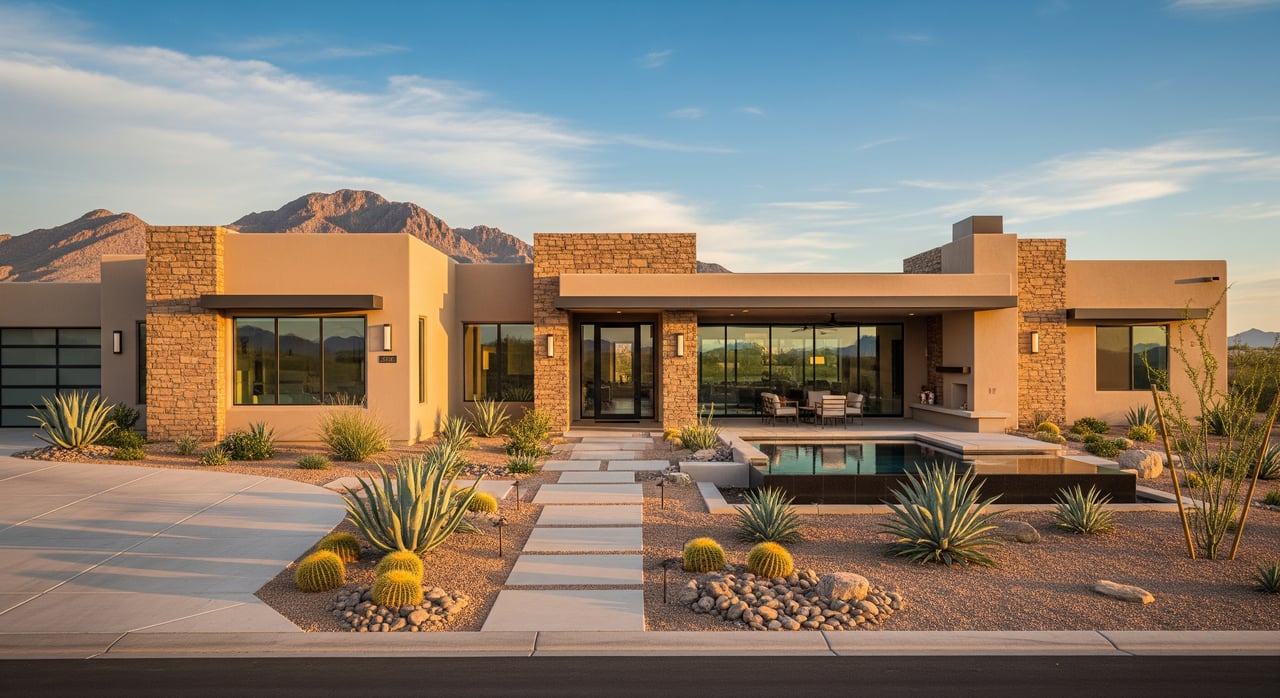
- Replace broad turf with decomposed granite in a cohesive color
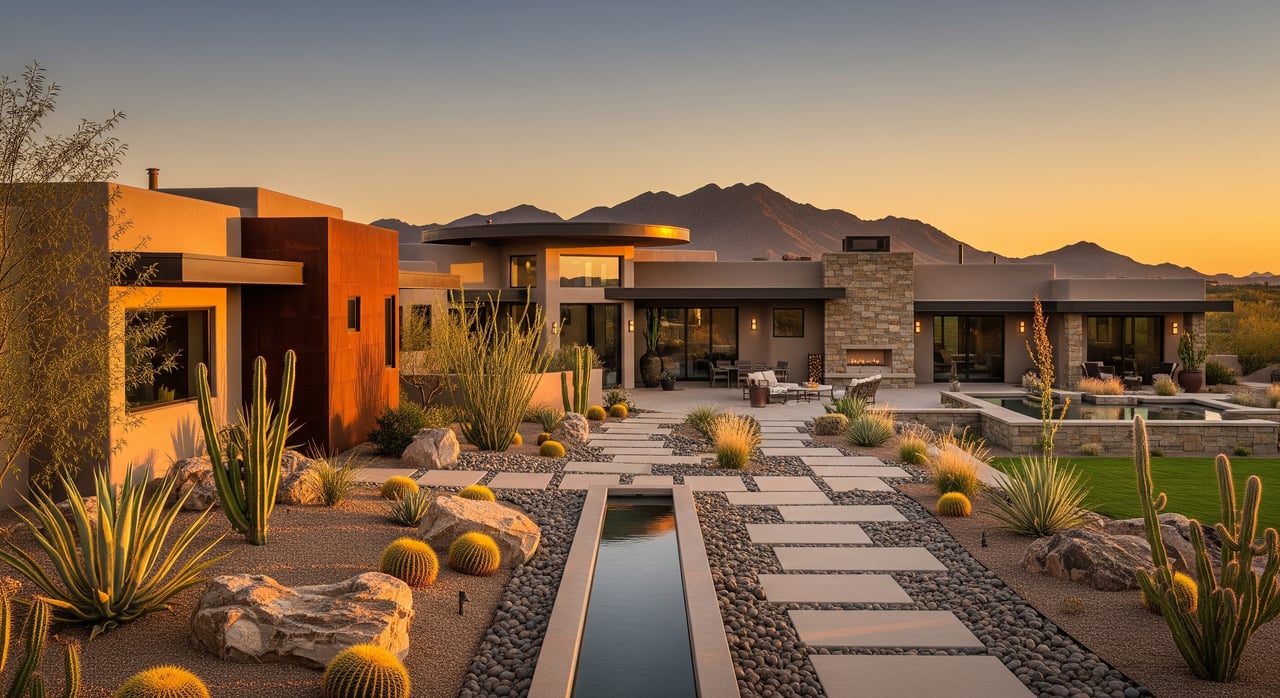
- Add a meandering paver or flagstone path to guide visitors
- Use one to three specimen trees for structure
- Cluster agaves and low-water perennials for contrast
Layered planting recipe
- One or two shade trees sized to your lot
- Mid-height shrubs for year-round structure
- Seasonal color from perennials placed in visible spots
- Sculptural succulents near the entry for visual pop
Entry emphasis and lighting
- Keep a direct, well-lit line from driveway to front door
- Use an accent bed near the entry with low-maintenance plants
- Install low-voltage LED uplights on a focal tree and subtle path lights
Before-and-after ideas
- Full lawn to modern xeriscape: Remove turf, install decomposed granite, add a curved paver path, plant two mesquites, and cluster agave with color accents.
- Overgrown to composed: Prune for structure, remove invasive species, install a symmetrical pair of desert willows to frame the entry, and add a gravel bed with succulents and a boulder grouping.
- Bare to layered: Plant one accent tree near the porch, add a small seating area with a shade sail, and define the driveway edge with drought-tolerant groundcover.
Value-focused improvement checklist
Prioritize projects that create a clear welcome, reduce perceived maintenance, and add texture.
Quick and low-cost
- Remove dead plants and weeds, then blow rock clean
- Power-wash walkways and driveway
- Clean or repaint the front door
- Trim trees to lift canopies and reveal the entry
- Add fresh gravel or mulch where needed
- Install solar path lights for instant evening appeal
Medium investment
- Convert nonfunctional turf to drip-irrigated xeriscape beds
- Plant one or two shade trees to cool living areas
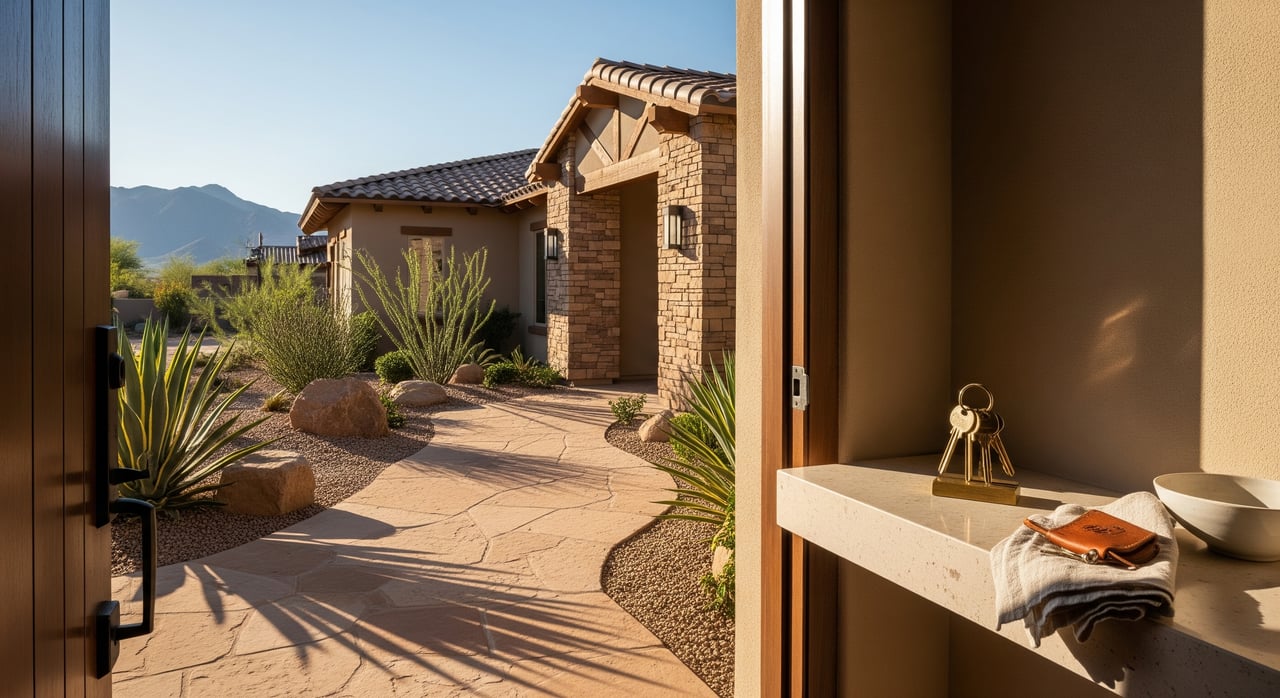
- Add a defined path from curb or drive to the front door
- Replace overgrown hedges with low-water, structured shrubs
Higher-cost, higher impact
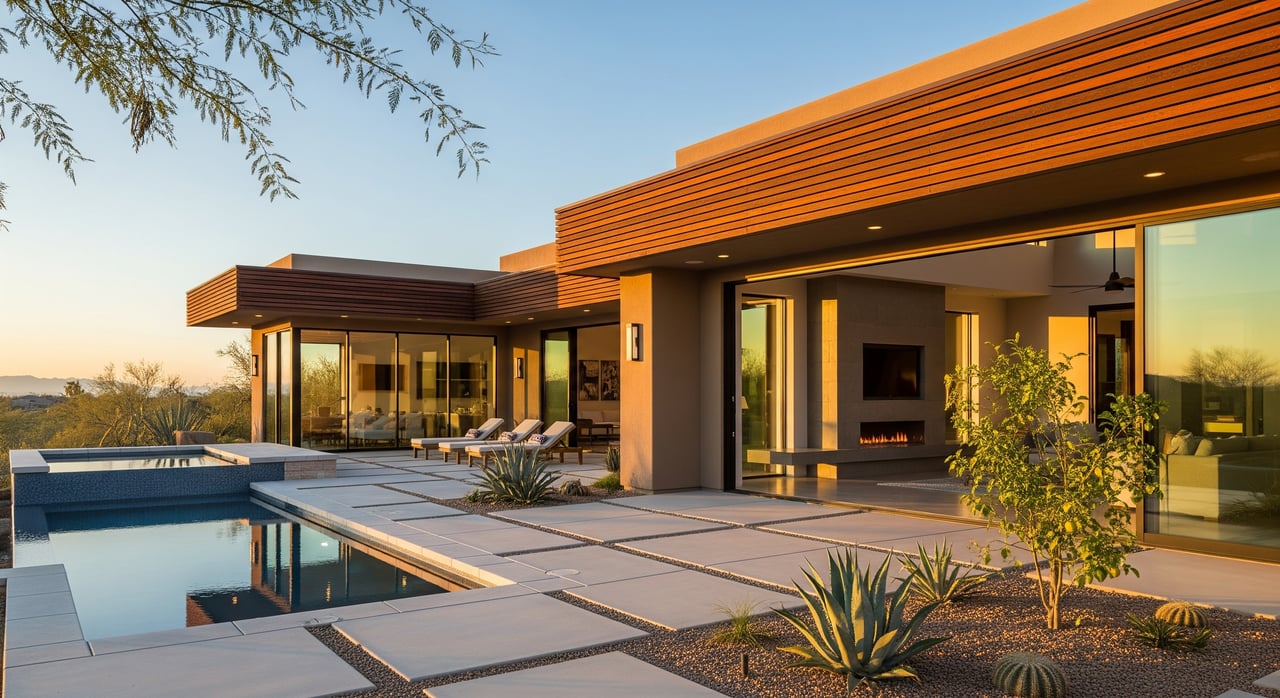
- Build a pergola or permanent shaded patio to define outdoor living
- Regrade hardscape or add retaining elements for cleaner lines and better drainage
- Install high-quality synthetic turf where a small, tidy lawn look is desired
- Launch a native tree planting plan for long-term canopy and comfort
Practical steps: rules, rebates, and contractors
Verify HOA rules and permits
Many Litchfield Park neighborhoods have HOAs with approved plant lists, turf limits, and hardscape rules. Always review your architectural guidelines before major front-yard changes. City permits are uncommon for plant swaps and small shade elements, but larger grading, walls, or roofed structures may require approval.
Explore rebates and resources
Regional water providers and conservation programs often offer turf-removal and irrigation-efficiency incentives. Check your local water utility, the Arizona Department of Water Resources, and regional plant and xeriscape guides for support materials, watering schedules, and plant lists. EPA WaterSense offers helpful national best practices for irrigation controllers and drip design.
Hire the right pro and phase the work
Look for contractors with proven desert landscaping portfolios in Maricopa County. Ask for references from recent local projects and a written plan showing hydrozones, irrigation details, and mature plant sizes. If the scope is large, phase it: start with turf removal and high-visibility areas, then add shade trees and built features next season.
A simple weekend-to-season plan
A stepwise approach keeps costs manageable and results consistent.
- Weekend 1: Clean-up and define. Remove weeds and dead material, prune for structure, edge beds, and wash hardscape. Refresh gravel where it looks thin.
- Weeks 2 to 4: Install drip, plants, and lighting. Convert any spray zones to drip, plant your shade trees and core shrubs, and add low-voltage lighting for evening appeal.
- Next season: Add finishing touches. Consider a pergola or shade sail, upgrade the path, or introduce a small turf or synthetic area for function if it suits your use.
Ready to list? Tie landscaping to your sale
A polished desert landscape photographs beautifully and makes showings feel calm and inviting. Buyers see shade, smart irrigation, and organized planting as signs of a well-cared-for home with manageable costs. If you plan to sell, time plant installs so they are established before professional photos and keep irrigation schedules consistent to avoid stress on new plants.
If you want a quick curb-appeal plan tailored to your home and neighborhood, reach out to Bruce Adams for guidance on what will resonate with Litchfield Park buyers and how to position your property for a strong first impression.
Bruce Adams is ready to help you prep, price, and present your home with confidence.
FAQs
What desert plants perform best in Litchfield Park’s heat?
- Choose drought-tolerant, desert-adapted species proven in zones about 9b to 10a, such as mesquite, palo verde, desert willow, Texas sage, and agaves.
How does xeriscaping reduce my water bill in Maricopa County?
- Replacing spray-irrigated turf with drip-irrigated, low-water plants typically cuts outdoor water use while reducing mowing, fertilizing, and runoff.
Where should I plant shade trees for the biggest benefit?
- Prioritize the west and southwest sides to block harsh afternoon sun, and use east and west placements to provide summer shade while allowing winter light.
Do buyers in Litchfield Park still want turf?
- Some buyers prefer a small, functional lawn for play or pets, but many value low-maintenance designs; keep any turf limited and efficient or consider quality synthetic options.
What HOA or permit rules could affect my front yard redesign?
- Many neighborhoods require HOA approval for plant lists, turf amounts, hardscape materials, and visible structures; larger grading or roofed shade may need city permits.